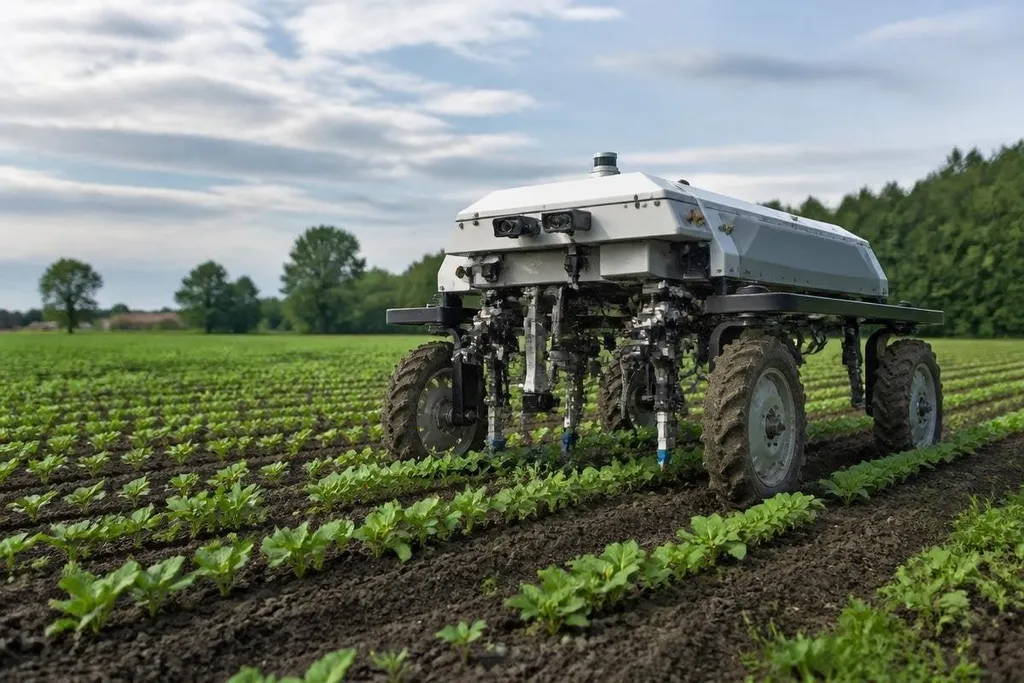
A farm robot can spot a weed, place a seed, or pick fruit without carrying a person through the field. The useful question for food producers is where that machine can work for a full task, in changing weather and uneven soil.
- Cameras and LiDAR help robots read crops and field edges
- Small machines can target weeds instead of treating whole rows
- Harvesting remains harder because fruit changes shape, color, and position
Where robots can help first
Weeding is a clear starting point. A robot can use RGB cameras to find green plants, then compare each plant with the crop row stored in its software. A mechanical tool can cut or bury a weed, while a small spray nozzle can treat one plant instead of a full strip of soil.
That change matters when a farm wants to reduce chemical use or protect young crops. It also gives the robot a narrow job with a clear result: find a target, move to it, and act without touching the crop.
Crop checks suit robots for the same reason. A machine carrying cameras can move between rows and record gaps, leaf color, plant size, or signs of water stress. A multispectral camera reads bands of light beyond normal human vision, which can help spot crop changes before they are easy to see from the ground.
The data still needs a person who knows the field. A pale leaf may point to disease, poor drainage, or a lack of nutrients. The robot can mark the location, but a grower must decide what action makes sense.
The machines behind the work
Agricultural robots use several parts that already exist in other types of automation. Real-time kinematic GPS, often called RTK-GPS, gives a tractor or rover accurate position data. Cameras help with plant detection, while LiDAR measures distance by sending out laser pulses.
Together, these sensors help a robot stay between rows and avoid posts, irrigation lines, rocks, and people. Wheel encoders measure how far the machine has moved, and an inertial measurement unit records changes in speed and direction when the ground blocks a clean GPS signal.
Robot size also changes the job. A small electric rover can move through narrow beds and return to a charging point. A larger platform can carry more water, tools, or harvested produce, but its weight may press soil into hard tracks after rain.
Harvesting adds a harder constraint: the robot must handle produce without bruising it. Reports on agricultural robotics coverage from Robot24.com can tie claims to the crop, machine, task, field conditions, and test date before the next section examines why picking remains difficult.
Harvesting is still the hard test
Picking fruit needs more than good positioning. The robot must find a ripe item, reach it without damage, grip it with the right force, and place it in a container. Leaves can hide fruit, sunlight can change camera results, and branches can block the arm.
A robotic arm with an end effector, the tool fixed to its end, may work well in a controlled greenhouse. Open fields create more variation. Wind moves leaves, rain changes surfaces, and a fruit that looks ready from one side may still need time on the plant.
This is why a machine that works in a demo may need more testing before it can replace a worker across a full harvest.
The missing proof is not a short successful picking run. It is steady work across different rows, weather conditions, crop sizes, and night or day lighting.
What a farm should check
A purchase decision needs a field task, not a robot category. Use this checklist before signing a trial or service contract:
- Name the job. Pick one task, such as row scouting or mechanical weeding, with a result the farm can measure.
- Check the ground. Record row width, slope, mud, dust, stones, and the places where a machine must turn.
- Ask for field records. Request results from the same crop type, weather range, and work period you expect.
- Measure human work. Count the hours needed to supervise, refill, clean, repair, and move the robot between fields.
- Set a stop rule. Define when the trial ends if crop damage, missed weeds, or downtime passes an agreed limit.
- Price the support. Include batteries, tools, software fees, spare parts, training, and transport.
The strongest early use cases will be narrow and repeatable. Weeding between fixed rows and scouting large areas fit that pattern better than picking delicate fruit in a windy field.
I’d start with a robot that records useful field data or removes a repeat task, then expand only after a full season of results. Food production depends on machines that keep working when the soil, crop, and weather refuse to follow the plan.